Two Years of Bloom: From “Do you know a guy?” to an AI-Native Operations Marketplace
Bloom started as a hands-on network helping hardware teams find the right partners and get work done. After two years and 100+ brands, we’re encoding what works into an AI-native platform that understands your project, finds the right providers, and manages the trust, coordination, and payments in between.

Dec 9, 2025
By
Chris Nolte
Two years ago Justin and I started Bloom with a simple, stubborn belief: hardware teams shouldn’t have to build a world-class operations machine from scratch.
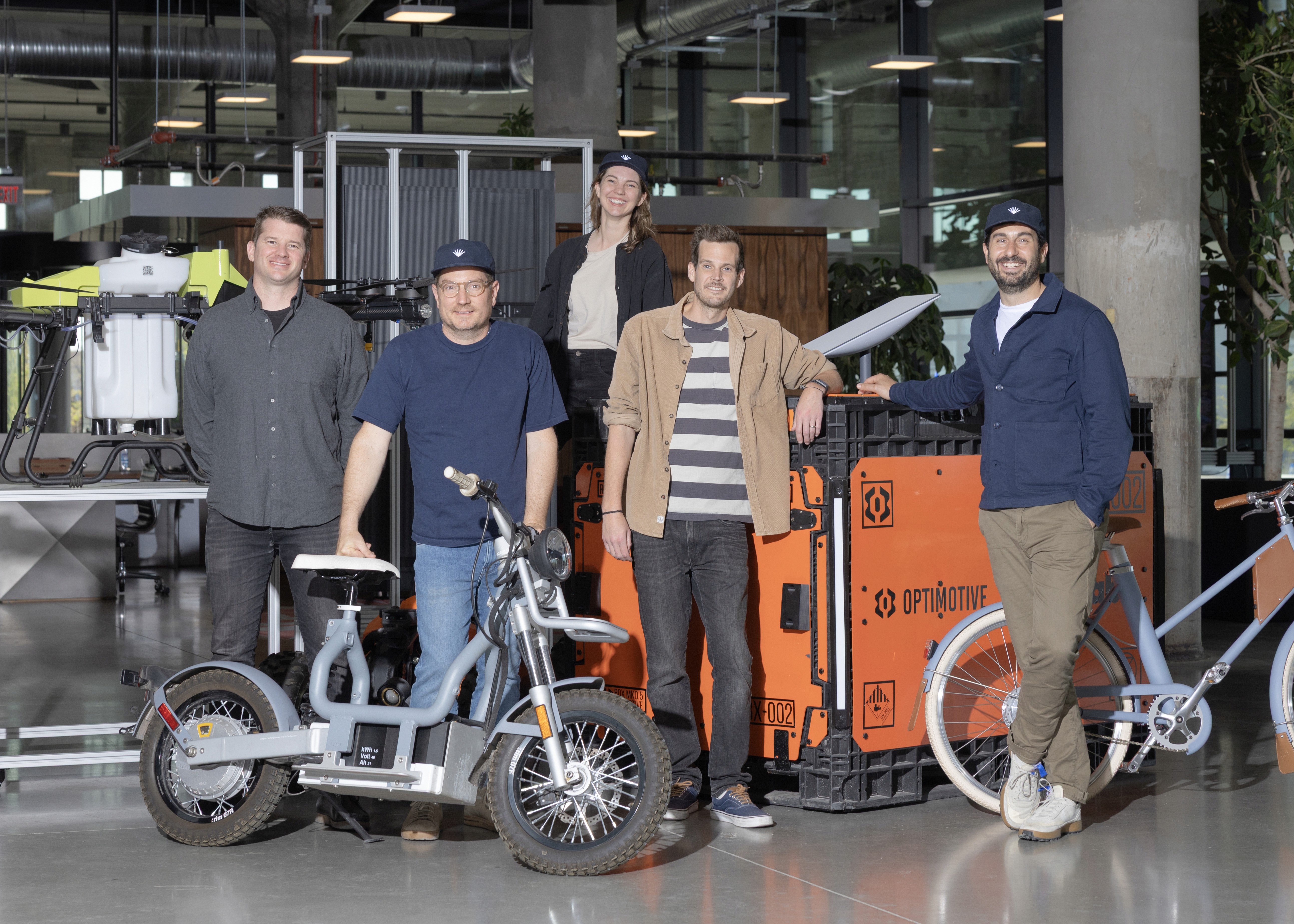
Since going live last year we’ve matched over 100 hardware brands with thousands of vetted partners across North America; From the largest global OEMs to incredible venture-backed companies across mobility, energy, robotics, and more, we’ve moved millions of dollars of goods through the network by supporting projects spanning across manufacturing, assembly, warehousing, logistics, after-sales services, and beyond.
Along the way, we have seen how brittle the old infrastructure really was. Most work started with “do you know a guy?”, moved through scattered spreadsheets and inbox chains, and depended on ad-hoc matchmaking that wasted crucial time and money on poor fits, duplicated quotes, and misaligned expectations on both sides.
This update is about what we’ve learned and what we’ve started building to fundamentally change how teams build, deliver, and service their hardware.
What the last two years taught us
In two years of running real work through the network we have seen firsthand where things break and where Bloom can have the most impact. A few patterns stand out:
Hardware teams want more than another directory. A directory of logos isn’t good enough. They want someone to own the messy middle: scoping, vetting, negotiation, and coordination.
The best providers are often hard to find. The shops brands actually want to work with are busy, under-marketed, have high barriers to entry and rarely showcase their true capabilities on their websites.
Trust is the real bottleneck. Brands need confidence that providers can deliver on time, at quality, with clear communication and fair terms. Providers need confidence that Bloom has vetted the customer, the work is ready and real, and payments will be made reliably and on time.
Ops knowledge compounds. Every successful project informs and improves upon a protocol: how to scope this kind of job, which questions to ask, what red flags to watch for, what “good” looks like.
For the first chapter of Bloom, our team carried most of this out manually. We ran the calls, translated messy requests into structured RFPs, hunted down the right shops, and kept both sides aligned all the way through booking and payment. It worked, and it taught us a lot, but it doesn’t scale to the size of the opportunity we see ahead of us.
So we did what good hardware teams do when they hit a limit: we started turning the playbook into an intelligent product. We’re scoping projects faster, matching better, growing the network, and keeping work moving, all powered by two years of detailed data from our manual operations that made it possible.
Building the Bloom Intelligent Digital Experience
This next chapter of Bloom is about making everything we’ve been doing by hand available through a digital intelligence platform.
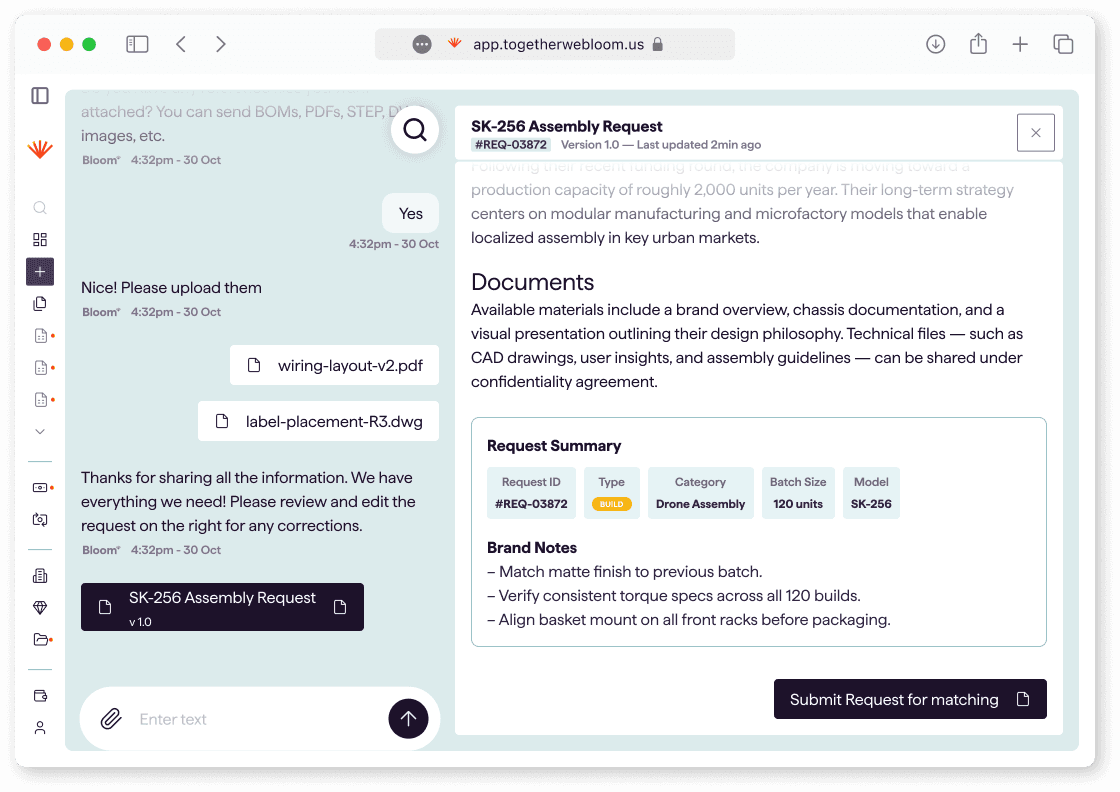
We took two years of multi-node service bookings, conversations, project outcomes, and transaction data and used it to train the models powering Bloom’s new AI-native platform. Very few teams see this much real workflow through one network, which gives Bloom a meaningful head start with a digital ecosystem that grows with every project, every day, and every request made by a rapidly growing list of brands and providers.
Think of it as the front door to the Bloom stack:
It starts with a natural conversation about a project, just like talking with one of our own seasoned ops leads.
Under the hood, it’s following a protocol: pulling in enriched data about the company and project, asking targeted follow-ups, and translating stated needs into a structured service request instead of a vague “I need a manufacturer.”
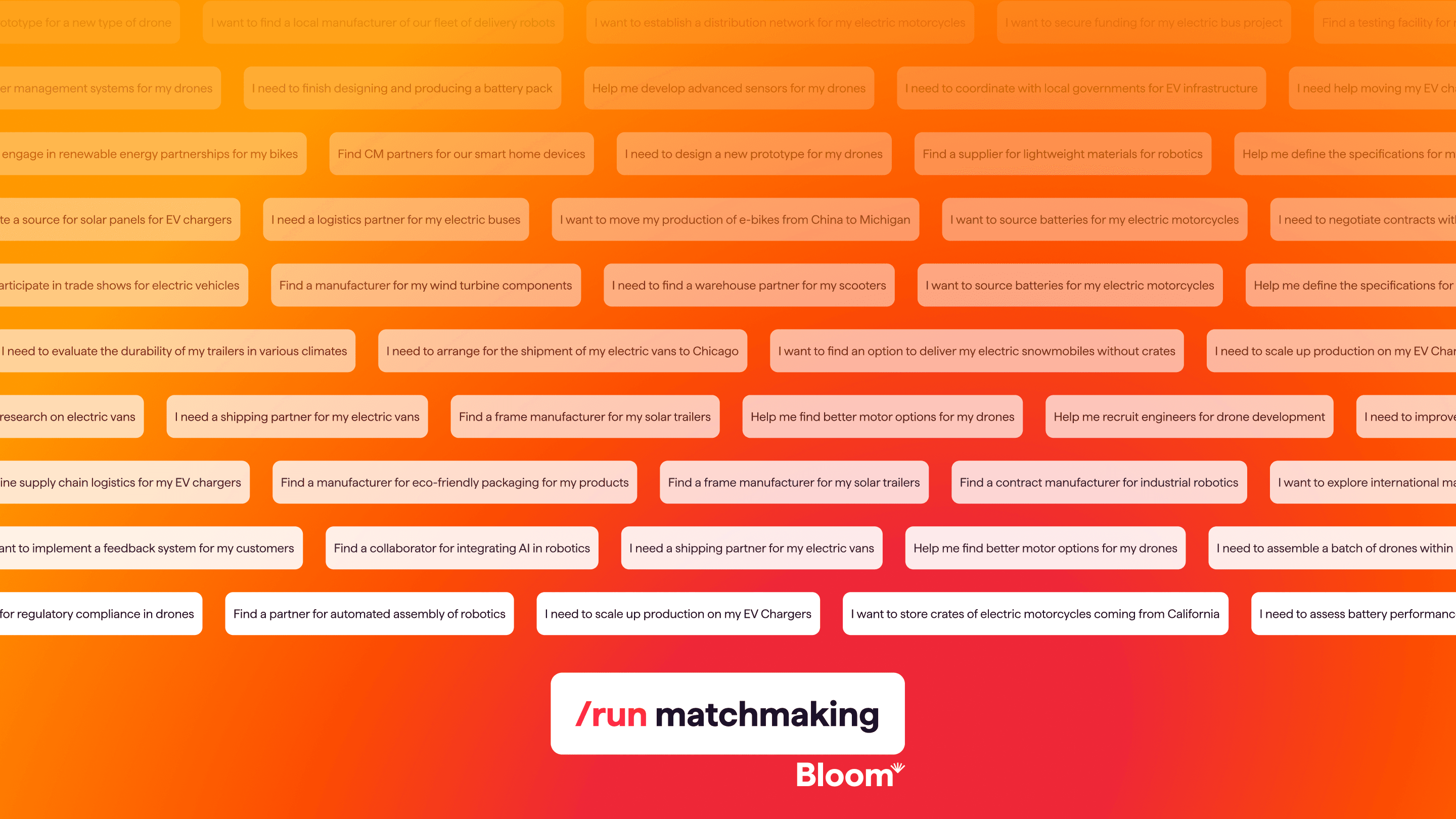
The real fun begins when a conversation activates our matching engines to search across thousands of providers- not just by obvious tags but by capabilities, certifications, past performance, geography, capacity, and more.
We’re going far deeper than “I know a guy.”
Bloom is saying: “Let’s check who in the network is actually the best fit for this specific job, at this moment, and based on real data you won’t find on a website or through generic AI tools.”
An operations stack that behaves more like AWS
If AWS lets software teams stop worrying about racks and servers, Bloom is doing the same for hardware supply chains and operations.
Instead of building a patchwork of tools, vendors, and processes from scratch, Bloom plugs you into a vetted generative operations stack throughout the intelligent marketplace:
Request & Matching Engines
AI-driven workflows that turn messy asks into complete RFQs and RFPs, letting hardware teams find the right providers in a fraction of the time.Unified Intelligence Layer
A continuously enriched knowledge graph of brands, providers, capabilities, quotes, and outcomes that gets smarter with every interaction.Marketplace Agents
Agents that help negotiate scope, standardize terms, coordinate quotes, and keep both sides aligned as work moves from idea to delivery.Bloom Pay
Integrated billing, contracting, and financing options so the work keeps moving even through cash crunches, while service providers get the confidence and security of reliable payments.
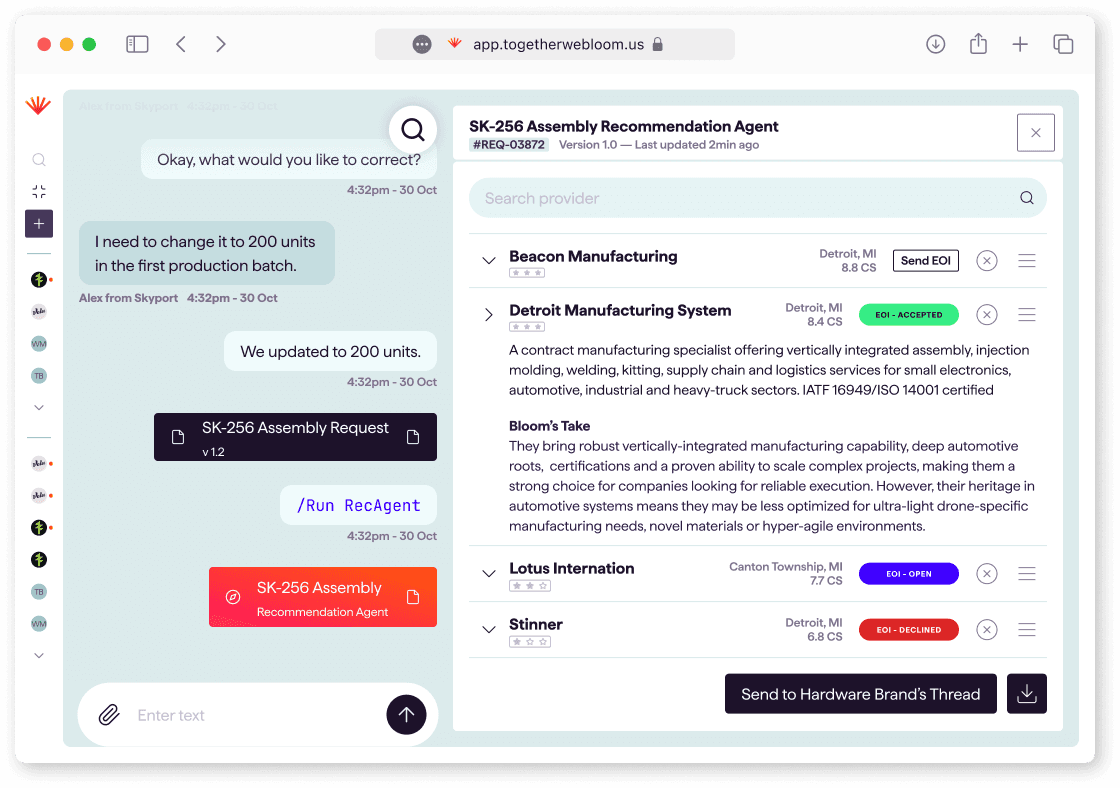
But here’s where it really delivers. It bakes in the best practices we’ve seen across hundreds of projects and keeps refining them: every conversation, every contract, every shipment is a learning event that feeds back into the system.
Over time the experience starts to feel less like using a tool and more like working with a very experienced operations team that already knows project constraints, preferred partners, risk appetite, product roadmaps, and is always available.
What’s next
We’ve been rolling out this digital experience to existing members, new brands, and service providers. We’ll be sharing more on specific product updates, case studies, and the teams already building on the new platform over the coming months.
Whether you’re a hardware company tired of stitching together supply chain infrastructure or a provider wanting a clean and more consistent way to win the right kind of work, we’d love for you to check out what we’re building. Take it for a spin here.
While the infrastructure for modern hardware is being re-written, Bloom is changing how hardware is built, delivered and serviced.